
AI Voices Will Rule Podcasts by 2027 — Here’s Why
And how the mic will never be the same. AI-generated voices are changing the way podcasts can be created, personalized, translated, and delivered to listeners .
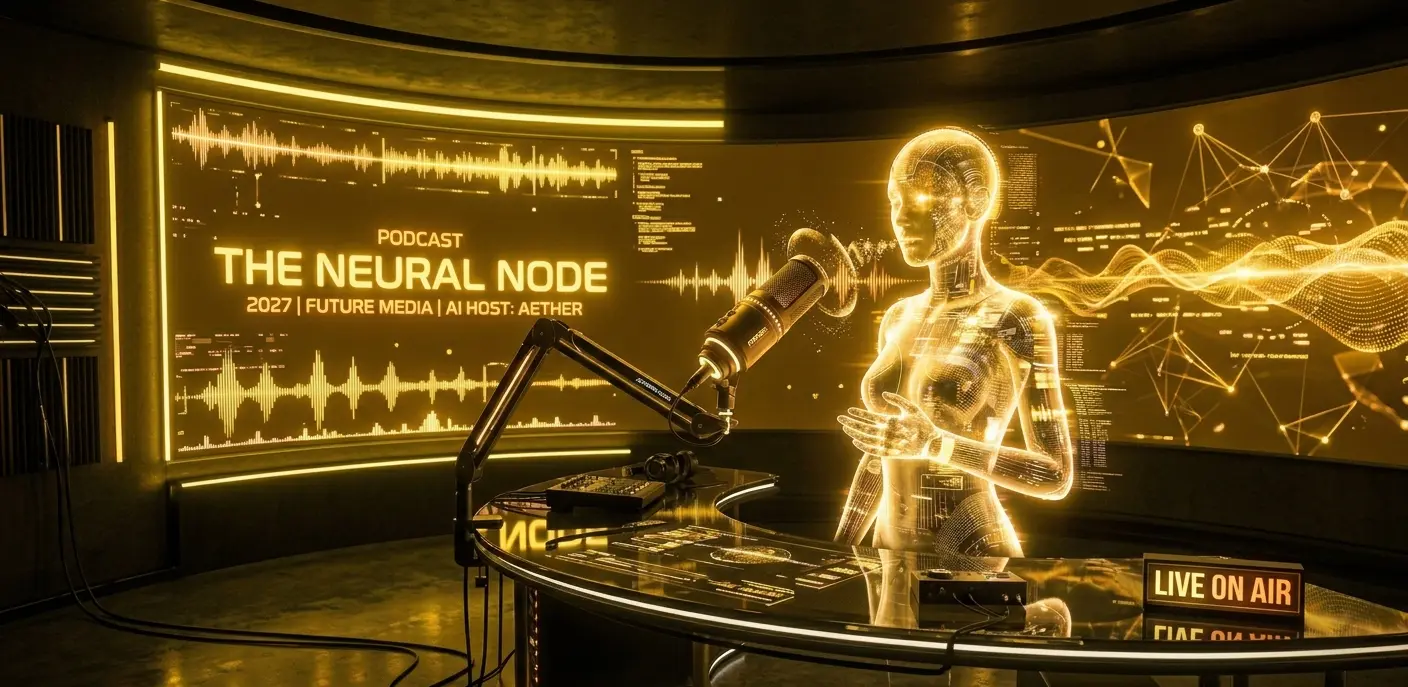
To put it bluntly, the voice behind your favourite podcast may not be alive by 2027. And that’s not a gloomy joke; rather, it’s a forecast based on how quickly AI voices are developing and how eager consumers are for new material .
Why This Isn’t Sci-Fi — It’s Momentum
AI voice technology has evolved from robotic monotone to eerily human over the last few years. We’re talking about natural-feeling pacing, accents that don’t irritate, emotional inflection, and clarity that can compete with the best voice actors .
The difference between studio-recorded and AI-generated audio has decreased thanks to tools like ElevenLabs, Murf, and others that have democratised high-quality voice production .
Now picture that quality on a large scale.
More Shows Than Human Hosts Could Ever Make
Production time has always been one of the main obstacles in podcasting:
- Write the screenplay.
- Take a voice recording.
- Modify the takes.
- Eliminate background noise.
- Master the sound.
It’s slow, but it’s a labour of love.
All of that can be calculated in minutes by AI. Do you want 10 episodes per week? AI is capable of handling it. Do you want versions in different languages? AI is also capable of that .
For producers, it means producing more work more quickly, and for viewers, it means a never-ending selection of new programming .
Personalized Podcasting — Your Voice, Your Way
This is where things start to get pretty exciting:
AI personalises audio in addition to producing it.
By 2027, listeners may select:
- 🎙️ The narrator’s tone — slow, animated, dramatic
- 🌍 The language or accent
- 💡 Even pace according to commute duration or mood
That’s customised audio entertainment, not just accessibility.
But What About Real Humans?
Excellent query. A common question is: Does this take the place of human hosts?
The truthful response: Not totally.
Artificial intelligence voices are tools, and the best tools foster creativity rather than stifle it .
Journalists
Genuine experience and real-world reporting.
Comedians
Emotional subtlety and authentic human timing.
Storytellers
Actual viewpoints on global affairs and society.
Although AI can narrate, humans still take the lead. An ecosystem that is hybrid is most likely:
- Creative directors who are human
- AI as a tool for production
- Listeners now have more options than before
Will AI Voices Be Ethical? That’s the Big Twist
Tremendous power comes with a tremendous deal of responsibility. Mass adoption poses important queries:
The technician will arrive sooner than the policy. Building trust frameworks, legal safeguards, and unambiguous ethical norms will be the focus of the upcoming 18 to 24 months .
The future podcasting era will be dominated by platforms and creators who get this right early.
Final Mic Drop: The Future Sounds Human — Even When It’s Not
By 2027, AI voices will run a significant portion of podcasts rather than merely appearing in them:
What about the audience?
The distinction between AI and human voices will become so hazy that you will be more interested in the narrative that is told than in the identity of the speaker .